Originally written as a column for Inside Housing.
The prospects for housing investment look bleak whoever wins the election – and that is looking on the bright side – but there was an interesting comment this week from the frontrunner to be the next prime minister.
The Autumn Statement found money for tax cuts from an implausible sounding freeze in future capital investment and squeeze on departmental budgets after 2025. This seems designed both as a pre-election bribe and as a trap for Labour.
Labour leader Keir Starmer duly refused to fall into it in a speech at the Resolution Foundation think tank in which he said that anyone who expects the party ‘to quickly turn on the spending taps’ if it wins power will come away disappointed.
That will trigger bad memories for anyone who can remember the early years of the last Labour government, when Tony Blair and Gordon Brown pledged to match Conservative spending plans in its first two years.
That was disastrous for the social housing budget since those plans included deep cuts that seemed unrealistic even to the outgoing Tories.
Originally written as a column for Inside Housing.
If the polls are anything like accurate, there will be a Labour government next year. What did what could be the party’s last conference before the election tell us about its plans for housing?
There seemed to be genuine excitement at packed fringe meetings at the prospect of meaningful reform of renting and leasehold if (when?) the government fails to deliver. Potential future ministers are well aware of the key issues they will face and there was loud applause inside the main hall, especially when council housing was mentioned.
Keir Starmer’s ‘we are the builders’ speech on Tuesday ticked all the right boxes on housing supply and planning reform and he became the first potential prime minister to declare himself a Yimby.
However, the conference still left some big questions about the prospects for real change.
Originally written as a column for Inside Housing.
Inflation is starting to fall at last but the chances are what you pay for your housing has gone up along with the cost of everything else.
But this week’s inflation figures got me thinking about what we really mean by ‘inflation’ and how rising prices work differently in different tenures.
For starters, it all depends on the measure you use. The Consumer Price Index (CPI) is the one in the Bank of England’s inflation mandate so it matters most to its decisions on whether to raise interest rates or not.
CPI inflation affects the Bank’s decisions on interest rates which in turn drives mortgage rates so it is good news that it fell to 6.7 per cent in the year to August. However, CPI does not include owner-occupiers’ housing costs and it is not the index favoured by the Office for National Statistics (ONS).
If you’re not confused yet, on the ONS’s favoured measure of CPIH (which includes owner-occupier housing costs and council tax) inflation fell to 6.3 per cent in the year to August.
However, those costs are based on an estimate of the equivalent rents that owner-occupiers would be paying. There may be sound economic arguments for excluding rising asset values from the inflation calculation but rising house prices still mean rising housing costs for home owners that are ignored.
Old-style Retail Price Index (RPI) inflation – also falling but still considerably higher at 9.1 per cent – is the only measure that directly includes mortgage interest payments but is seen as less accurate than CPI and is no longer treated as on official statistic by the ONS. Despite that, RPI is still used to set price increases in some leases.
For all the differences between the three measures, it does seem clear that rising costs for renters and owners are playing an increasingly important role in inflation in household costs as the impact of the huge hikes in gas and electricity prices starts to recede. This ONS graph illustrates that only too clearly:
But what is really happening to house prices and rents? It all depends on who you believe.
Originally written as a column for Inside Housing.
The thing that struck me after Gillian Keegan’s hot mic moment is that virtually any other Conservative cabinet minister could clam the same thing.
Ok it may be stretching it a bit to say that Rishi Sunak, Jeremy Hunt et al are doing ‘an effing good job’ but they could quite reasonably say that ‘everyone else has sat on their arse’ (even if we might debate the use of ‘else’).
Schools with crumbling reinforced autoclaved aerated concrete (RAAC) have inevitably become a metaphor for the state of the country and the government’s attitude to public investment, chiming perfectly with Keir Starmer’s attack lines about ‘sticking plaster politics’ and ‘cowboy builders’.
But think for a minute about housing and Michael Gove could reasonably claim to have done more than all his predecessors to tackle a building safety crisis even more serious RAAC and more to restore the legitimacy of social housing even as he promises long-delayed reforms of leasehold and private renting.
Whether that amounts to an ‘effing good job’ very much remains to be seen: the building safety crisis continues for those left outside Gove’s settlement and his commitments on the other three areas are mostly rhetorical rather than actual.
In the meantime, councils are going bankrupt and housing associations are cutting their development programmes. Housebuilding in general is falling: while ministers continues to proclaim the government’s target of 300,000 new homes a year by the mid-2020s, they have surrendered to the Tory backbenchers on planning and there is no chance of hitting it.
If the opinion polls and by-election results are anything like accurate, the long term will only be a maximum of 17 months, but let’s assume that Rishi Sunak returns in triumph as prime minister at the next general election with the faithful Michael Gove as his housing secretary.
Together, they trumpet their achievement of delivering a million new homes over the course of the last parliament and say they are still committed to their target of 300,000 new homes a year without specifying exactly when.
But then what? The politics of ‘the right homes in the right places’ (aka non-Tory constituencies in inner cities) has worked out nicely, with the Conservatives keeping a swathe of suburban and rural seats thanks in part to their attacks on Labour plans to ‘concrete over the countryside’.
The reality on the ground is rather different. The housebuilding industry has scaled back its output in the wake of the housing market downturn even if fears of a full-blown crash were not realised.
In any case, that million new homes in the previous parliament was not much more than in the one that came before. Help to Buy to deliver 387,000 of the completions between 2013 and 2023 but has finished.
Some are calling for the scheme to be revived but the Treasury will need some convincing after what looked like a one-way bet on rising house prices turned into losses on many of the most recent equity loans.
Negative press coverage about Help to Buyers who need more ‘help’ is becoming a major headache that is only accentuated by problems that continue to dog leaseholders despite Gove’s Building Safety Act.
So much for the (possible) future, but look a little closer in the present and it is hard to ignore the echoes from the past.
Originally written as a column for Inside Housing.
Achievements may be thin on the ground but, six months into her job as housing and planning minister, Rachel Maclean does at least seem to have grasped one of the fundamentals of the role.
The manipulation of numbers by ministers is part of a proud tradition that dates back years but makes me remember fondly the days when Grant Shapps would routinely obfuscate between ‘social’ and ‘affordable’ housing and Iain Duncan Smith would use ‘statrickstics’ to back up his bogus claims about welfare cuts.
In her speech to Housing 2023 earlier this month, Maclean harked back to the glory days of the social/affordable shuffle with a claim that ‘we’ve got record numbers of social rent homes that have been built’.
Asked by Inside Housing how she squared that with the fall in social rent completions from almost 39,562 a year in 2010 to 7,644 last year, she went full Nelson to claim ‘that’s not a figure I recognise’. And she doubled down to boast that ‘we’ve delivered more social rented homes than under the last Labour government’. The actual number is, of course, less than half – and most of them were funded by the investment programme the coalition inherited from Labour.
Originally written as a column for Inside Housing.
For as long as I can remember the social housing business model seems to have been at a turning point.
From private finance to stock transfer, from affordable rent to welfare reform and from austerity to the rent cut, the policy changes have kept coming against a wider backdrop of financial crisis, Grenfell, Covid, Rochdale and the cost of living crisis.
For years it’s seemed that something has to give – until it does and landlords have to do more with less and tenants get less for more and apparent turning points become spinning in ever-decreasing circles.
This time around, though, you really get the sense that things can’t simply continue as they are and as they have been.
That was what came across quite powerfully both from this week’s first hearing of the Levelling Up, Housing and Communities Committee’s inquiry into the finances and sustainability if the social housing sector and from the written evidence submitted in advance. The inquiry continues with a new set of witnesses on Monday.
This is not just about the impossibility of squaring the circle between competing priorities, of continuing to deliver new homes at the same time as fixing unsafe buildings, regenerating ageing estates and decarbonising existing homes.
And it’s no longer just about doing more with less either. The return of inflation, and even larger increases in construction prices, mean delivering the same with much less.
Originally written as a column for Inside Housing.
‘Homes for social rent are a fundamental part of our housing stock—a lifeline for those who would struggle to obtain a home at market rates.’
It’s a sign of how much has changed in the last six years that statements like that from Conservative politicians (in this case housing minister Rachel Maclean in a Commons debate last week) have become almost routine. For good measure, she also reaffirmed ‘the unshakeable commitment of the government to drive up both the quality and the quantity of this nation’s housing stock’.
The comments are part of a steady conversion by ministers to the merits of a tenure that not so long ago they seemed intent on dismantling. Since Grenfell, there has been a steady softening in tone and relaxation in policy, with Theresa May as prime minister and Michael Gove as housing secretary prominent among the converts.
But all the fine words and tweaks to policy are not yet matched by results. As MPs from both sides of the house pointed out in the debate, the current output of 7,500 social rent homes a year fails to match the 21,600 a year lost to the Right to Buy and demolition, let alone the 90,000 a year that the all-party Levelling Up, Housing and Communities Committee has consistently argued are needed.
All this in the same week as research by the National Housing Federation (NHF) showed that two million children are living in overcrowded homes with no personal space because they cannot access a suitable and affordable home.
Much of this is obviously down to the fact that the Treasury remains unconvinced about these arguments. True, £11.4 billion for the Affordable Homes Programme (AHP) over four years represents huge progress on the days when it seemed like there would be no AHP at all. True, the government has titled the balance slightly more towards social rent and Right to Buy replacements. But this is still a fraction of what is required and the AHP been badly eroded by inflation.
And so much of the baleful legacy of 2010 to 2016 is still in operation and yet to be unravelled. As Inside Housing reported last week, affordable rent is now generating rents at double social rent levels in some areas. Pointedly, the biggest gap of all is in the Surrey Heath constituency of Michael Gove, where the rent on a three-bed affordable rent home is £1,125 a month compared to £557 a month at social rent.
Originally written as a column for Inside Housing.
If it’s broken, who broke it? If there were mistakes and errors, who made them?
It was quite an Easter week for Michael Gove as he moved into confessional mode first in a think tank report and then in a Today programme interview.
‘That the current housing model– from supply to standards and the mortgage market – is broken, we can all agree,’ the housing secretary wrote in an introduction to the report from Bright Blue and Shelter. ‘That change is necessary is undeniable. We are bringing about change – and we are determined to see it through.’
And, asked on the Today programme on Thursday (listen from 08:12), if he had gone through ‘an awakening’ on housing, he said that: ‘The thing that affected me most was the Grenfell fire. What the Grenfell inquiry, in particular, has subsequently brought to light were a chain of errors. I’m very happy to reiterate that there were some mistakes and errors that were made not just by the coalition government but by governments before which contributed to social tenants not getting the support that they deserve, not having their voices heard. And so change had to come and we are delivering that change.’
Note that Mr Gove leaves us with the same key message: others made the mistakes that broke the housing model and now he is here to fix things.
Some of what he’s saying is quite true – he has reversed much of the deregulation of the past – but the interview still begged more questions.
What exactly was he admitting to – and how much of the blame was he really taking for himself and his Conservative colleagues?
As symbols of failure, take a former council house in south London chopped up into six bedsits, housing association tenants waiting in vain for repairs and private renters searching non-stop for homes
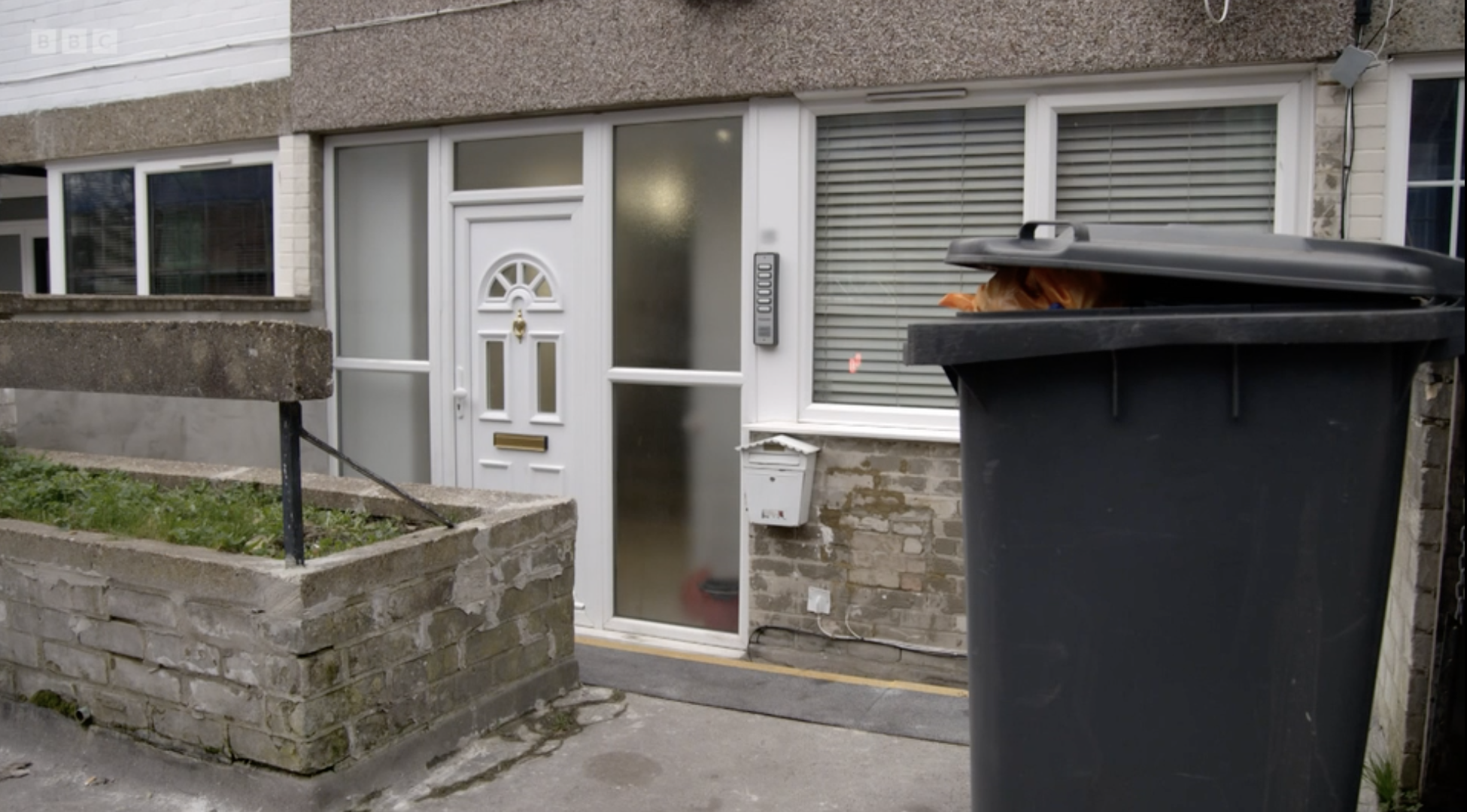
Those symbols of failure don’t come much starker than the three-bedroom council house on the Bampton estate in Forest Hill featured in the brilliantly appalling BBC Panorama documentary What’s Gone Wrong With Our Housing?
The first tenant moved into the home in 1971, bought it under the right to buy for £15,000 in 1984 and sold it for £85,000 in 1988. It is now owned by a private landlord who has converted it into six bedsits rented out for £960 a month each.
Most of what amounts to £60,000 a year in rent is paid in housing benefit by the government that sold it for a quarter of that.
As if that was not enough to make the point, the same private landlord has done the same thing to three other houses in the same terrace and is pocketing £250,000 a year.

 Jules Birch